
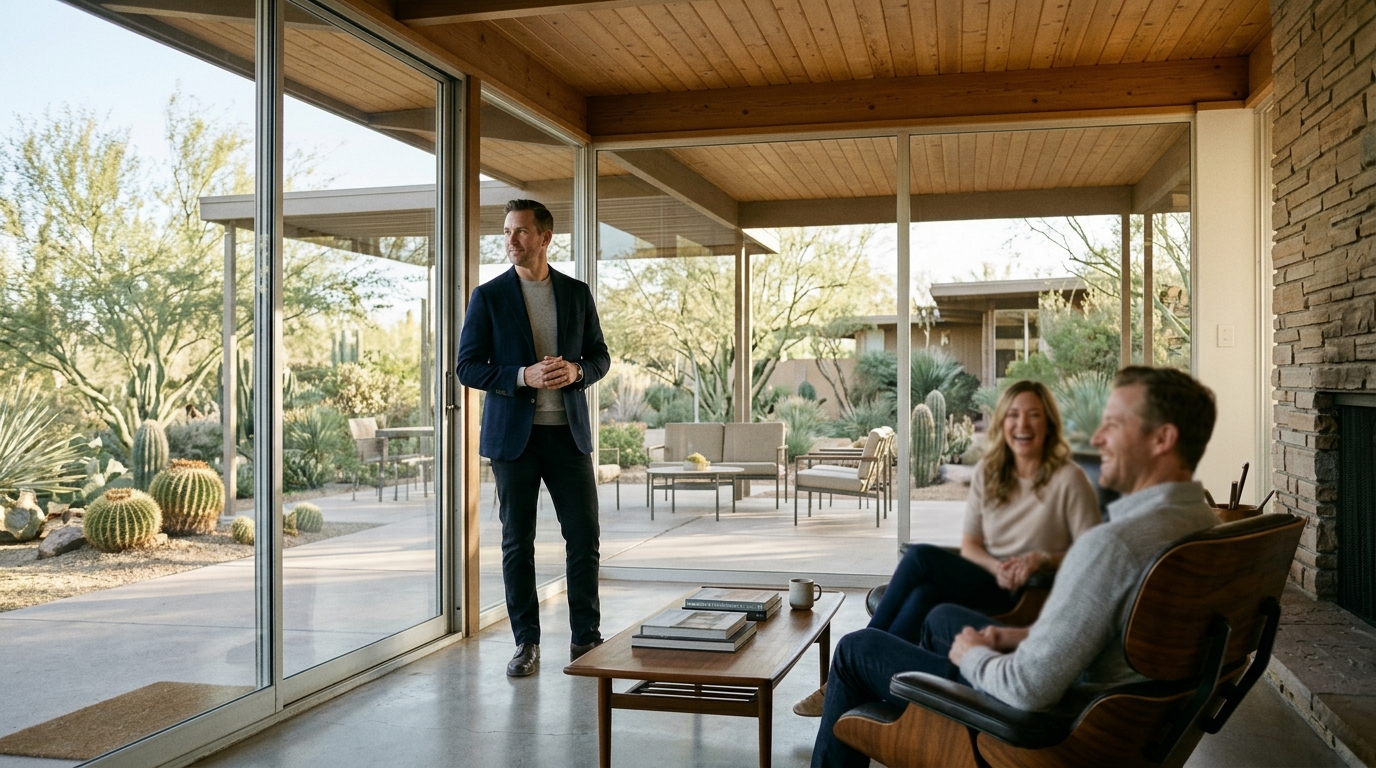
Phoenix agents specializing in mid-century modern homes focus on architectural integrity, historic preservation, and accurate valuation of 1940s to 1960s properties. This guide covers how to identify the right professional for these unique structures, the specific skills required for preservation districts, and how to navigate the current market. We examine the architectural nuances that define these homes and the regulatory frameworks that protect them.
Architectural Home Specialization
Mid-century modern architecture is a distinct design movement characterized by clean lines, open floor plans, and a strong connection to the outdoors. In Phoenix, this style often manifests as low-pitched roofs, large windows, and integration with the desert landscape. A specialized agent understands that these features are not just aesthetic choices but structural elements that affect value and maintenance.
Identifying True Mid-Century Features
True mid-century homes differ significantly from generic suburban builds. They often feature post-and-beam construction, original hardwood floors, and custom cabinetry. An agent with specific expertise can distinguish between a genuine 1950s build and a later renovation that mimics the style. This distinction is critical for pricing, as authentic architectural details command a premium in the current market.
Valuation Beyond Square Footage
Standard valuation models often fail to capture the value of architectural character. A specialized professional looks at the quality of original materials, the integrity of the floor plan, and the home's historical significance. For example, a home in the Willo Historic District may have a smaller footprint than a newer build, but its preserved bungalow details and mature landscaping justify a higher price point. Understanding these nuances ensures sellers do not underprice their properties and buyers do not overpay for superficial updates.
Market Dynamics for Architectural Homes
The market for mid-century homes in Phoenix has shifted toward a more balanced pace in recent years. Buyers have more time to inspect properties, allowing for a deeper evaluation of architectural quality. Agents who track local inventory daily can identify which specific neighborhoods are seeing increased demand for these styles. This data helps clients make informed decisions about timing and pricing.
| Feature | Mid-Century Modern | Generic Suburban Build |
|---|---|---|
| Roofline | Low-pitched, flat, or butterfly | Steep gable or hip |
| Windows | Large, floor-to-ceiling, picture windows | Standard double-hung or casement |
| Floor Plan | Open concept, indoor-outdoor flow | Compartmentalized rooms |
| Materials | Original hardwood, teak, glass | Carpet, vinyl, standard wood |

Historic Home Preservation
Historic home preservation is the practice of maintaining and restoring buildings of architectural or cultural significance. In Phoenix, many mid-century homes are located within designated historic districts, which come with specific zoning and renovation rules. Navigating these regulations requires an agent who understands the local preservation office guidelines and the long-term value of maintaining architectural integrity.
Understanding Historic Districts
Phoenix contains multiple preservation areas, each with distinct character and rules. The Willo Historic District, for instance, features a mix of Bungalow, Tudor, and Ranch architecture. Buyers in these areas must review specific preservation guidelines before planning exterior changes. An agent familiar with these districts can explain what is permitted, such as adding a garage or changing the roofline, and what requires approval. This knowledge prevents costly mistakes and ensures the home remains compliant with local standards.
The Role of the Agent in Preservation
A specialized agent acts as a bridge between the homeowner and the preservation community. They understand the importance of maintaining original details while allowing for modern updates. This balance is key to preserving the home's value and appeal. For sellers, the agent can highlight the home's preservation status as a major selling point, attracting buyers who value authenticity and history. For buyers, the agent provides a realistic view of the maintenance and regulatory responsibilities that come with owning a historic property.
Long-Term Value and Community
Living in a historic district often means being part of a community that values conservation. This can lead to stronger neighborhood cohesion and higher property values over time. Agents who understand this dynamic can advise clients on the long-term benefits of preservation. They can also connect clients with resources for restoration, such as specialized contractors and preservation grants. This holistic approach ensures that the home is not just sold, but cared for in a way that respects its history.
Key Takeaways
- Specialized agents understand the specific architectural features of mid-century homes, such as post-and-beam construction and open floor plans.
- Valuation of architectural homes requires looking beyond square footage to assess the quality of original materials and design integrity.
- Historic districts in Phoenix have specific zoning and renovation rules that must be followed to maintain compliance.
- Preservation status can be a major selling point, attracting buyers who value authenticity and historical significance.
- Agents with local expertise can navigate the regulatory landscape of historic districts, preventing costly mistakes for homeowners.
- The market for mid-century homes in Phoenix is balanced, giving buyers more time to inspect and evaluate architectural quality.
- Choosing an agent with a focus on homes with character ensures that the unique aspects of the property are highlighted and valued correctly.
Frequently Asked Questions
What defines a mid-century modern home in Phoenix?
A mid-century modern home in Phoenix is typically built between the 1940s and 1960s, featuring clean lines, low-pitched roofs, large windows, and an open floor plan that connects the interior with the outdoors.
How do historic district rules affect renovations?
Historic district rules often restrict exterior changes to maintain the neighborhood's architectural character. Homeowners must usually obtain approval from a local preservation office before making changes to the roofline, facade, or adding structures like garages.
Why is it important to hire an agent who specializes in these homes?
Specialized agents understand the unique value drivers of mid-century and historic homes, such as original materials and architectural integrity. They can price the home accurately and market it to the right buyers who appreciate these features.
Do historic homes cost more to maintain?
Historic homes may require specific materials or techniques for repairs to maintain their character. However, many owners find that the long-term value and community support of historic districts offset the initial costs of careful maintenance.
Can I modernize a mid-century home without losing its value?
Yes, if done thoughtfully. Updating systems like HVAC and electrical while preserving original architectural details can enhance livability without diminishing the home's historical value. An agent can advise on which updates are most beneficial.
What are the benefits of living in a historic district?
Living in a historic district often provides a strong sense of community, preserved streetscapes, and potential long-term appreciation in property values. It also ensures that the neighborhood's character is maintained for future generations.
Conclusion
Finding the right agent for a mid-century modern or historic home in Phoenix requires looking for specific expertise in architectural valuation and preservation regulations. Joe Janus, a Phoenix REALTOR® with Compass, specializes in homes with character across Metro Phoenix, including the historic districts of Central Phoenix and the ranches of Arcadia. His approach combines deep local knowledge with a commitment to accurate pricing and thoughtful negotiation. Whether you are buying or selling, working with a specialist ensures that the unique aspects of your home are understood and valued. To discuss your specific property or search criteria, for a personalized consultation.